




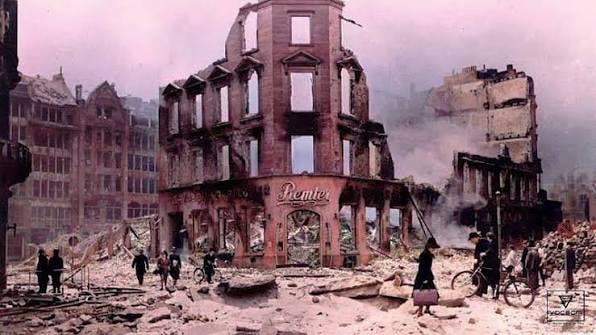
On the night of August 24, 1940, London experienced an incident that would change the course of the Battle of Britain. It was a navigation error by the Luftwaffe, which caused German bombers to attack the city, triggering a decisive British response.
London had endured previous attacks, but the Luftwaffe was focused on eliminating the Royal Air Force (RAF) and its defensive capabilities. The situation became critical after weeks of bombardments in southern England, where the RAF faced significant losses and damage to airfields.
In an unexpected turn of events, a group of German bombers, due to navigation problems in the darkness, dropped bombs on civilian areas of London. This event was not the planned start of the Blitz, but it triggered a reaction from the British government led by Winston Churchill, who declared: “If they come to London, we will go to Berlin.”
On the night of August 25 to 26, the RAF conducted its first mass attack on Berlin in retaliation. Although the material damage was limited, it had a significant psychological impact, demonstrating that the war could not be contained in London.
This attack provoked Hitler’s fury, who, interpreting it as a provocation, altered the Luftwaffe’s strategy. Instead of focusing on military targets, he began a campaign of urban bombing, redirecting efforts toward London. Starting September 7, London became the primary target of the Luftwaffe.
In the following months, air bombings intensified, marking the beginning of a nightmare for British civilians, but also giving the RAF crucial time to recover its defensive capacity. This change in strategy not only altered the course of the battle but also illustrated the impact of a simple mistake in a large-scale conflict.
Source: www.infobae.com