


To top up a bip card in Santiago, go to a Metro ticket office, a Centro bip or a punto bip (minimum CLP 750 at ticket offices), or load it online through the Red app, Movired or pagoYa and activate the credit at a Metro kiosk or with an NFC Android phone.
Our bip card Santiago guide covers every top-up channel, how to check your balance, paying by QR code or bank card, what the card costs and the fares for buses, Metro and Tren Nos. Figures come from red.cl, ChileAtiende and the fare resolution published in Chile’s Diario Oficial on Saturday 21 February 2026 (checked October 2026).
How to top up a bip card in Santiago, step by step
Topping up in person takes about a minute: you hand over the card and the money at a top-up point and the credit is ready at once. Online top-ups need one extra step, because the amount stays pending until you activate it on the card.
- Pick a channel. In person: Metro ticket office, Centro bip or punto bip. Online: the Red app, Movired, pagoYa or another partner channel.
- Choose the amount. At Metro ticket offices the minimum is CLP 750, then any multiple of CLP 10, according to ChileAtiende.
- Pay. In person you pay at the counter; online you pay by bank card in the app or on the website.
- Activate an online top-up. Tap the card on an infobip kiosk in a Metro station, or activate it in the Red app on an Android phone with NFC.
- Check the balance. Confirm the credit on tarjetabip.cl or in the Red app, then tap the card on the validator when you board.
If you live in Santiago and ride every day, automatic top-up reloads each day the amount you spent the day before and charges it to a bank card. Red says it works for the bip card, student and senior cards, and bip QR accounts.
Where to top up: every bip card Santiago channel
You can top up at Metro ticket offices, Centros bip, puntos bip in authorised shops and through Red’s online channels. The official map of top-up points is on tarjetabip.cl.
| Channel | Type | What to know |
|---|---|---|
| Metro ticket office | In person | Minimum CLP 750, then multiples of CLP 10 |
| Centro bip (incl. MetroTren ticket offices) | In person | Also sells the card |
| Punto bip (authorised shops) | In person | Locations on tarjetabip.cl |
| Red app (Centro bip section) | Online | On NFC Android phones it loads and activates without a kiosk |
| Movired and pagoYa | Online | Activate the credit at an infobip kiosk in the Metro |
| Mach, Chek, Mercado Pago, Servipag, Unired, Metro website | Online, partners | Listed by red.cl as partner channels |
| Automatic top-up | Online | Replaces the previous day’s spending |
Activation is the practical difference. In-person credit is on the card immediately. Online credit waits until the card touches an infobip kiosk or an NFC phone, so load it before you reach the bus stop.
To top up with your phone, the most direct route is the Red app on an Android phone with NFC: you buy the credit in the app and hold the card to the phone. Without an NFC Android phone you can still pay in the app, but you activate the credit at an infobip kiosk in a Metro station.
How to check your bip card balance
You can check your bip card Santiago balance for free on tarjetabip.cl under “Consulta saldo y movimientos” by entering the card number. The Centro bip section of the Red app also shows it, reading the card directly on NFC Android phones.
A standard bip card balance expires after 3 years without use, and a bip QR account after 5 years without activity, according to the official ChileAtiende page on the bip card. If you keep a card for repeat trips to Chile, use or top it up at least once in that period.
If you run out of credit on a bus, red.cl describes an emergency trip: on buses only you can tap with a zero balance and the fare is deducted from your next top-up. The benefit applies from the card’s second top-up, so a brand-new card cannot use it.
Paying with bip QR or a bank card
A bip QR account lets you pay the bus without a physical card: you generate a QR code on your phone and scan it at the bus validator. You sign up in the Red app (which uses Chile’s ClaveÚnica login), Mercado Pago, Metro MUV or Prepago Los Héroes, among other apps.
The bip QR account accepts top-ups from CLP 100 to CLP 50,000 per load in the Red app, according to ChileAtiende. BancoEstado also offers its own QR fare in its banking app. None of these QR options work for the student (TNE) or senior (TAM) discount fares.
Contactless Visa and Mastercard payment, with a physical card or a phone wallet, has worked on the Metro and on the Alameda-Nos train since Friday 13 February 2026. As of 8 October 2026 it is not yet available on Red buses: the Transport Ministry announced it for a later phase without an official date. On the bus you still need a bip card, TNE, TAM or a QR code, which matters for visitors who planned to tap a foreign card.
Bip card price and where to buy one
The standard bip card Santiago transport uses costs CLP 1,550 (card only, no credit) and is sold at Centros bip, Metro ticket offices and authorised shops. A personalised card with your photo, name and RUN (Chilean ID number) costs CLP 2,800 at Metro customer service offices, so for most short-term visitors the standard card is the practical choice.
The standard card is a bearer card: if you lose it or it is stolen, it cannot be blocked and the balance is gone. Avoid loading large amounts onto it, especially on a short trip.
One bip card Santiago transport accepts covers buses, Metro and Tren Nos. The TNE (student) and TAM (pensioner Metro card) are personal and non-transferable.
Bip card Santiago fares in 2026: bus, Metro and Tren Nos
A Red bus ride costs CLP 795 at any time of day since Sunday 22 February 2026, when Transport Ministry Exempt Resolution 760 raised the adult fare by CLP 25. Metro and Tren Nos charge by time band: CLP 895 at peak, CLP 815 in standard hours and CLP 735 in low hours.
| Fare | Price | Details |
|---|---|---|
| Red bus, adult | CLP 795 | Same at all hours |
| Metro and Tren Nos, peak (punta) | CLP 895 | Mon-Fri 07:00-08:59 and 18:00-19:59 |
| Metro and Tren Nos, standard (valle) | CLP 815 | Mon-Fri 09:00-17:59 and 20:00-20:44 |
| Metro and Tren Nos, low (bajo) | CLP 735 | 06:00-06:59 and 20:45-23:00 |
| Secondary and higher-education student (TNE) | CLP 260 | Bus and Metro, all hours |
| Primary-school student | CLP 0 | Per the February 2026 resolution |
| Senior, bip Adulto Mayor card | CLP 390 | All modes, all hours, age 65+ |
| Senior pensioner (TAM) | CLP 260 | Metro only |
The figures come from the resolution published in the Diario Oficial on 21 February 2026 and Red’s fares page. We found no later change up to 8 October 2026, but the fare panel reviews prices periodically, so confirm before you travel.
Transfers: what you pay to combine bus and Metro
Every bip card Santiago trip can include up to 2 transfers (3 legs) for a single payment, within 120 minutes of your first tap, as long as you do not repeat a bus route. One transfer can be Metro and the other Tren Nos.
Bus-to-bus transfers are free. Bus to Metro, you pay the difference up to the Metro fare: CLP 100 extra at peak (CLP 895 in total) and CLP 20 in standard hours (CLP 815). In low hours the bus fare already covers the Metro. Metro to bus in low hours, CLP 60 is deducted to reach the CLP 795 bus fare.
For a regular commute, for example on bus 406 between Pudahuel and Las Condes or bus 506 between Maipú and Peñalolén, the two busiest routes of 2025, use these fares to plan your weekly top-up. For late trips, bus 405 runs 24 hours. All routes are in our guide to Santiago’s Red bus routes, and Metro hours are covered in our Santiago Metro opening hours guide.
Checklist before you board
Before boarding, every bip card Santiago rider should confirm three things: enough credit, an activated online top-up and a tap on the validator.
- Minimum credit for one bus ride: CLP 795.
- Online top-up: activated at an infobip kiosk or with NFC before you reach the stop.
- Validation: tap the card or QR code when you board; the 120-minute transfer window starts then.
- Next year’s trips: check Chile’s 2027 public holidays if you are planning long weekends.
Frequently asked questions
Where can I top up a bip card in Santiago?
You can top up a bip card at Metro ticket offices, Centros bip and puntos bip in authorised shops. Online, the Red app, Movired and pagoYa accept bank cards, and partner channels include Mach, Mercado Pago and Servipag. Online credit has to be activated at an infobip kiosk in a Metro station or with an NFC Android phone before you can use it on the bus.
What is the minimum top-up for a bip card?
The minimum top-up at Metro ticket offices is CLP 750, and from there you can add any multiple of CLP 10, according to ChileAtiende. A bip QR account in the Red app takes loads from CLP 100 to CLP 50,000. A bus ride costs CLP 795, so load enough for several trips to avoid running out mid-journey.
How do I check my bip card balance?
Check your balance on tarjetabip.cl under “Consulta saldo y movimientos” by entering the number printed on the card. The Centro bip section of the Red app also shows it. The website lists recent transactions too, which helps when you want to confirm a transfer charge or see whether an online top-up is still pending activation.
Can I pay for Santiago buses with a foreign credit card?
No, as of 8 October 2026 Red buses do not accept contactless bank cards. Tap-to-pay with Visa or Mastercard has worked since 13 February 2026 only on the Metro and the Alameda-Nos train. On buses you need a bip card, a student or senior card, or a QR code generated in the Red app or another participating app.
Do tourists need a bip card in Santiago?
Yes, if you plan to ride buses, a bip card is the simplest option for visitors. The Metro and the Alameda-Nos train accept contactless Visa and Mastercard since 13 February 2026, but Red buses do not. A standard card costs CLP 1,550 at Metro ticket offices. A bip QR account is the alternative, though the Red app registers users with Chile’s ClaveÚnica login.
How much does a bip card cost and does the balance expire?
A standard bip card costs CLP 1,550 with no credit included, and a personalised card with photo and RUN costs CLP 2,800 at Metro customer service offices. A standard card balance expires after 3 years without activity, and a bip QR account after 5 years, according to the official ChileAtiende page.
How much is a bus or Metro ride in Santiago in 2026?
A Red bus ride costs CLP 795 at any hour since 22 February 2026. Metro and Tren Nos cost CLP 895 at peak, CLP 815 in standard hours and CLP 735 in low hours. Students with a TNE pay CLP 260, and seniors with the bip Adulto Mayor card pay CLP 390 on every mode.
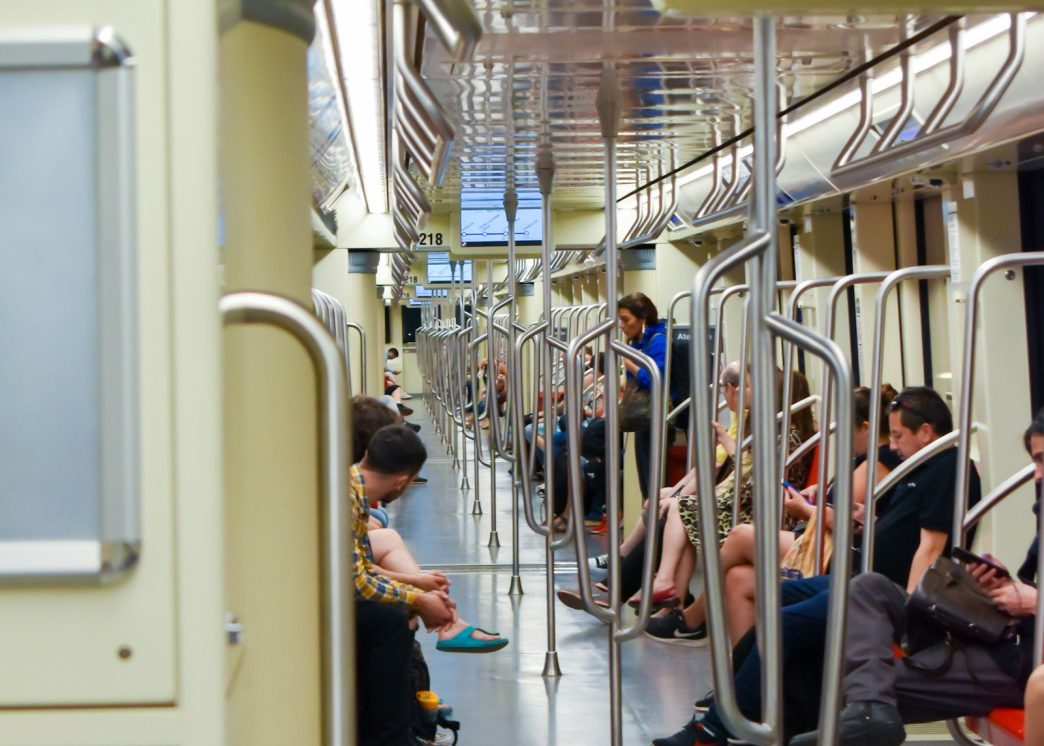
Cover photo: Andres Valdes / Unsplash