

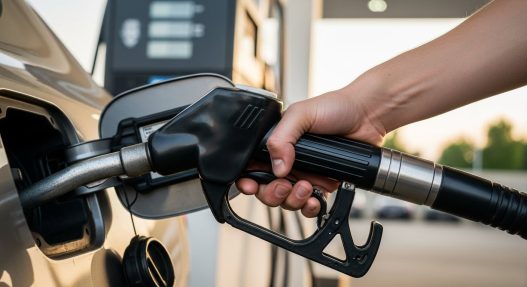
In the first seven months of 2026, fuel sales fell to their lowest level in two years, with a total of 5,667.3 million liters dispatched, a 5.26% decrease compared to the same period in 2023. This decline coincides with a 1,387% increase in the fuel tax since a change in administration.
According to an analysis from the Instituto Argentina Grande (IAG), gasoline sales between January and July 2026 were significantly lower than the 5,981.8 million liters recorded in the same period the previous year. The reduction is also reflected in the year-on-year comparison, where figures indicate a drop of 1.84% compared to the first seven months of 2025, with 314 million liters less sold than in the same period of 2023.
When breaking down by fuel type, premium gasoline experienced the sharpest decline, dropping 7.3% compared to 2023, while regular gasoline decreased by 4.5%. This pattern is consistent with the monthly survey from the Secretaría de Energía, which reported July as the worst month in year-on-year terms in the last two years, with a dispatch of 1,368,722 cubic meters of fuel, 6.4% lower than July 2025.
The IAG report also highlights that all provinces in the country, including the City of Buenos Aires, showed a decrease in gasoline sales in 2026 compared to 2023. Misiones recorded the most significant drop at 32.48%, followed by Formosa with 26.26%. Corrientes, La Rioja, and Entre Ríos also showed notable declines.
The IAG attributed this trend to a border effect, where in border provinces, gasoline prices have increased more than in neighboring countries, leading some consumers to seek lower prices across the border. Buenos Aires and Neuquén experienced the smallest declines, partly due to activity in Vaca Muerta.
In contrast to the sales figures in 2026, data from Surtidores for July indicates that the largest year-on-year declines occurred in Tucumán, Jujuy, and Salta, though the lack of reports from Refinor could distort the magnitude of these figures.
Regarding fiscal impact, the fuel tax has consistently increased its burden. In August 2026, the tax accounted for 20.1% of the price paid per liter at the pump, compared to 8.9% in November 2023. In real terms, this burden has tripled, increasing by 240%.
Currently, the price of a liter of regular gasoline in the City of Buenos Aires is 2,045 pesos, of which 411 pesos are attributable to taxes. The Government has continuously updated the tax, arguing that it is necessary to compensate for the delays caused by the previous administration.
A new tax update was expected for September 1, but was postponed by a decree to October 1, accumulating delays since 2024 and 2025. The Government justifies this decision as part of an effort to stimulate economic growth through a sustainable fiscal approach.
Source: www.infobae.com