

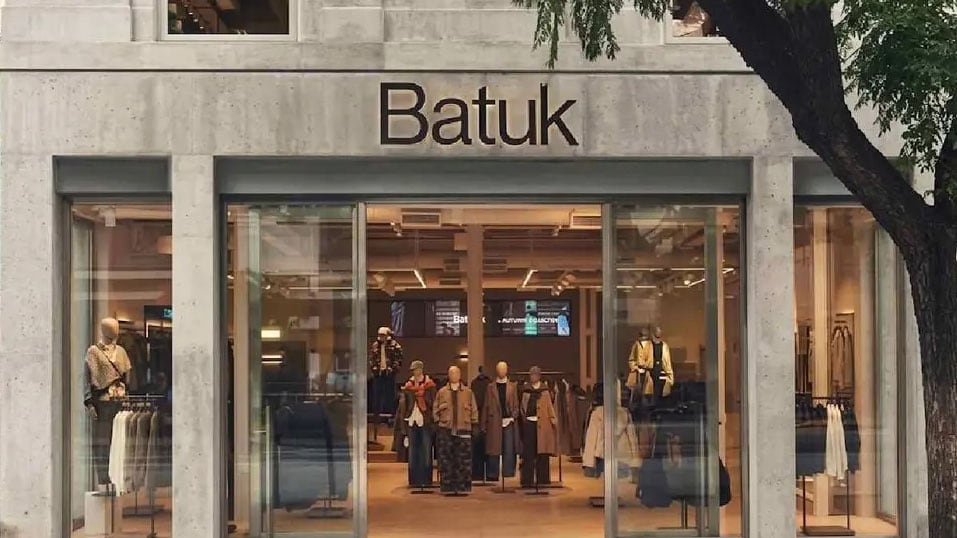
Barhut, the company owning the Batuk brand, has requested the opening of a preventive creditor arrangement due to a severe financial crisis. The company, with locations in Avellaneda, Avenida Santa Fe, and Avenida Cabildo, has stated that the decline in consumption and the increase in imports have exacerbated its situation.
Barhut’s sales contraction is significant, with a reduction of 40% over a three-year period, dropping from $3.373 billion in 2022 to $2.024 billion in 2025. The sharpest decline was recorded in 2024, with a drop of 35.4% compared to the previous year. Although for 2025 the company reported a slight nominal recovery, it was not enough to offset the accumulated damage.
A crucial factor in the financial deterioration is the high cost of financing; the report indicates that this has absorbed 96% of the operating result. Interest coverage has decreased from 2.40 times to 1.50 times, and when including all financial results, it stands at 1.04 times. Additionally, Barhut has acknowledged a total debt of $3.4875 billion with various banking entities, of which $2.5785 billion corresponds to bank loans in pesos.
The difficulties the company faces are also linked to low-cost imports and competition from e-commerce platforms such as Temu and Shein. These conditions have led to a decline in domestic consumption and an increase in production costs, leaving the company with idle capacity.
In its request for a preventive creditor arrangement, Barhut has asked that the payment of deferred payment checks issued prior to the filing be suspended, arguing that such payment could favor certain creditors over others. The firm insists that this measure is not intended to disregard the rights of check holders, but rather seeks to integrate those debts into the verification process of the arrangement.
Barhut describes the preventive creditor arrangement as a necessary tool to restructure its obligations and execute a financial recovery of the company, which faces critical situations related to declining sales, the growing burden of debt, and competition from imported products.
Source: www.infobae.com