


Argentinian scientists have created an innovative device that combines a headband with sensors and sound to help prevent cognitive decline while people sleep. This advancement is taking place at the Sleep and Memory Laboratory of the Instituto Tecnológico de Buenos Aires (ITBA).
In the Sleep and Memory Laboratory, four beds are set up for participants to sleep while connected to electrodes, as researchers record brain activity throughout the night. Pablo Gleiser, a researcher at ITBA, emphasizes the importance of this scientific environment in developing new technologies for sleep intervention.
The company NeuroAcoustics, founded by Gleiser and his colleagues, is dedicated to developing this technology. In addition to Gleiser, the team includes Cecilia Forcato, a PhD in Biology, and Rodrigo Ramele, a PhD in Computer Science. Together they are applying their knowledge to create a device that records brain waves in real-time during deep sleep.
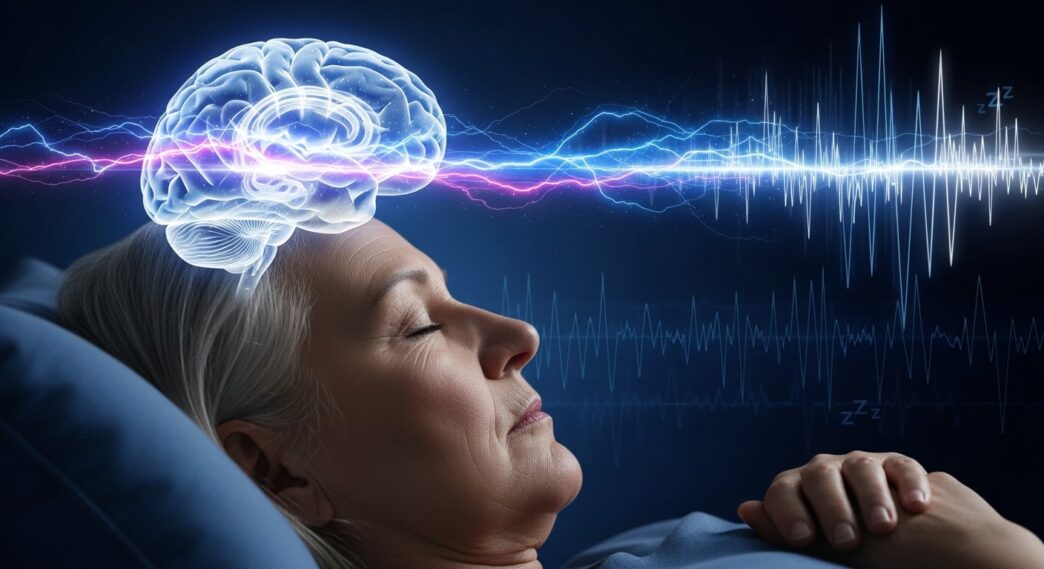
This new device uses artificial intelligence algorithms to identify slow waves of deep sleep and stimulate them with specific sounds. Gleiser explains that slow waves are essential for memory consolidation and brain cleansing. If these waves are affected, there may be implications for cognitive health, including the development of neurodegenerative diseases such as Alzheimer’s.
The device, which is worn like a headband, analyzes sleep phases and emits sound pulses at key moments to stimulate slow waves and improve sleep quality. This is particularly important because with age, these waves can lose their amplitude and regularity, affecting overall health.
One of the challenges in developing the device was ensuring it worked in real-time. Gleiser explains that a pulse that is too early or too late can diminish the effectiveness of the stimulation. Using artificial intelligence, the system is designed to anticipate and react to brain signals in a personalized manner, adapting to the individual variations of each user.
Since its inception in late 2022, NeuroAcoustics has made progress in validating the device through studies with volunteers in the laboratory. As processes become automated, the goal is to create an easy-to-use device that individuals can activate without the need for external intervention.
Source: www.infobae.com