


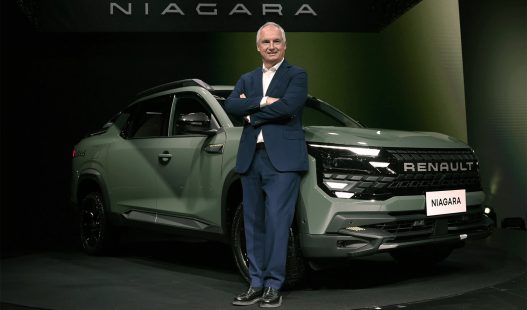
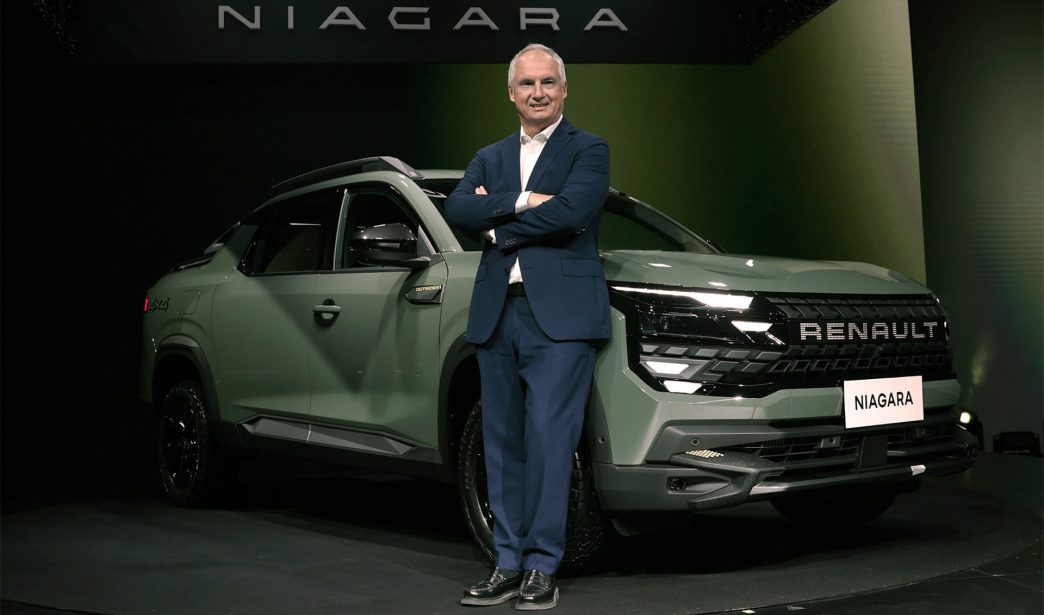
Fabrice Cambolive, global CEO of Renault, visited Argentina to unveil the new Niagara pickup, which will be produced at the Santa Isabel plant. During his visit, Cambolive emphasized the importance of protecting the local automotive industry from external competition.
Cambolive referred to the need to implement measures that favor cars produced in Argentina, suggesting that options be sought to offer competitive prices to consumers. “I understand that an open market has its advantages, but having factories in Argentina is something we must not lose,” he stated. The CEO highlighted that a special policy for local vehicles would help maintain a robust automotive industry.
Regarding competition from Chinese brands, the executive pointed out that it is crucial to accelerate development times and maintain technological advancement to remain competitive. He mentioned Renault’s new electric models that have been successful in Europe, although he acknowledged that tradition alone does not guarantee competitiveness.
Cambolive linked the need for greater production scale with the agreement between Renault and Geely of China, noting that a similar model will be implemented in Brazil to integrate the industry and dealerships, in order to increase competitiveness. Concerning the regional integration of parts, the CEO expressed that tariff-free trade for products from this partnership is needed: “The idea is to have that regional value integration for everyone as well. So yes, we need it,” he indicated.
The opening of the Argentine market, according to Cambolive, places more pressure on local manufacturers, which requires collaboration among employees, the state, and unions to achieve the necessary competitiveness. Pablo Sibilla, president and CEO of Renault Argentina, emphasized that locally manufactured vehicles face various tax burdens that imported ones from China do not, pointing to the need to balance the market.
Renault aims to consolidate Córdoba’s specialization in utility vehicles while focusing on passenger cars in Brazil. The Niagara, which will be exclusively produced in Santa Isabel, will be available in 19 countries in the region, with over 50% of its production destined for export, primarily to Brazil, Colombia, and Mexico.
The new pickup will feature a self-recharging hybrid engine, aligned with Renault’s strategy of offering electric vehicles in markets with suitable infrastructure and non-plug-in hybrids where infrastructure is limited. Cambolive noted that Renault has no interest in plug-in hybrids, describing their limitations in terms of space and efficiency.
Finally, regarding the possibility of a one-ton pickup, Cambolive mentioned that Renault remains interested in this segment and that any future development will depend on factors such as target markets and potential industrial partnerships.
Source: www.infobae.com