

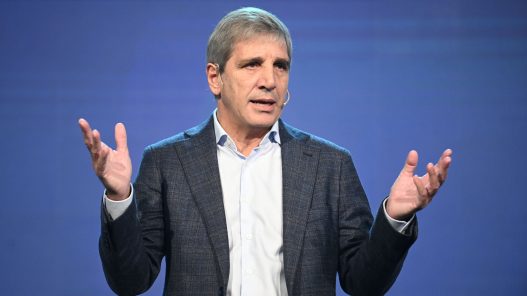
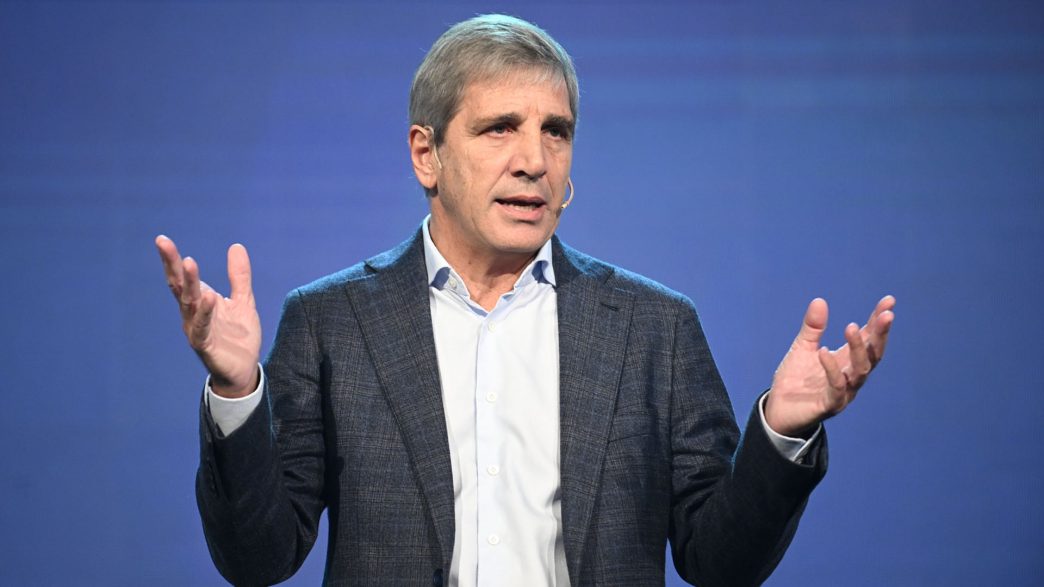
Economy Minister Luis Caputo stated that a possible victory of Flavio Bolsonaro in Brazil would create an unprecedented political affinity that would boost bilateral cooperation with Argentina, although he emphasized that the historical relationship does not depend on election outcomes. He also explained the volatility in Indec’s economic activity data and gave a positive assessment of Argentina Week in Paris, pointing to a recovery in investor confidence.
During an interview on the streaming program La Misa, by Carajo, Caputo claimed that, although the commercial and institutional ties between Argentina and Brazil are historic and persist regardless of electoral results, the ideological affinity between governments can translate into more dynamic cooperation. “Argentina has a historic institutional and commercial relationship with Brazil. It would always be there, regardless of who wins. Of course, this is now complemented by a political affinity that makes a difference,” the minister stated.
Caputo emphasized that political closeness improves dialogue and promotes joint work between the two countries. He also denied that a possible Bolsonaro victory would mean a loss of regional influence for Argentina, attributing regional political changes to the figure of Javier Milei and his influence, according to U.S. officials including Treasury Secretary Scott Bessent.
The minister praised the Trump administration’s policy toward Latin America, highlighting the geopolitical benefits gained without major investments, and noted how the expansion of allied governments in the region supports Argentina’s current strategy. “They greatly value what President Milei has done for the region,” he added.
Political context and regional relations
The political context in Latin America is undergoing transformations, where the rise of leaders with libertarian and conservative stances has modified traditional dynamics. The possible electoral victory of Flavio Bolsonaro, son of the former Brazilian president, represents an opportunity for Argentina to strengthen political alliances, given that ideological affinities often facilitate agreements and bilateral cooperation.
Historically, Argentina and Brazil maintain a stable and robust relationship across various fields, from trade agreements to regional integration mechanisms. However, political affinities can be decisive in driving more ambitious joint projects and in fostering smoother understanding that facilitates conflict resolution and shared strategic planning.
Javier Milei’s influence is evident not only in Argentine domestic politics but also in the regional landscape. Caputo highlighted that Milei’s inauguration has impacted political changes in other Latin American countries, a phenomenon acknowledged even by international actors such as the United States.
Practical impacts for Argentina and the region
For residents and consumers in Argentina and Latin America, the political alignment could translate into greater collaboration in economic, commercial, and infrastructure areas between Argentina and Brazil. According to Caputo, this favorable political climate can encourage dialogue and joint efforts, benefiting the bilateral agenda.
On the economic front, the minister offered a critical analysis of Indec’s economic activity data, emphasizing that the observed monthly volatility does not reflect the country’s true trend. He indicated that structural changes and specific events—such as sports or social events—can cause short-term fluctuations in the figures, but explained that the trend-cycle series shows 29 consecutive months of growth, albeit at a decelerated pace in recent months.
Caputo also detailed positive signals for the near future, such as the start of major road construction projects, new calls for mortgage credit tenders, and the inclusion of investments under the RIGI regime. All of these would indicate a more stable economic recovery starting from the last quarter.
Additionally, he highlighted Argentina Week in Paris as a key event to restore confidence among European investors. The presence of large-scale entrepreneurs and negotiations focused on respect for private property and contracts contributed to a shift in the external perception of the Argentine economy.
- 29 consecutive months of economic expansion according to trend-cycle.
- Current monthly growth variation of 0.2%.
- Almost 9,000 kilometers of road corridors to begin in October.
- Argentina Week event with numerous announcements of European investment.
Frequently Asked Questions
Does the Argentina-Brazil relationship depend on the election result in Brazil?
No, the relationship has a solid historic institutional and commercial foundation, but political affinity can facilitate and deepen cooperation.
What explains the volatility in Indec’s economic activity data?
According to Caputo, it is due to structural changes and specific events, and does not reflect the underlying trend, which shows sustained growth albeit slower in recent months.
What impact did Argentina Week have on investor perception?
The event improved confidence due to investment announcements and reaffirmation of respect for contracts and private property, showing a structural change in the Argentine economy.
Source: www.infobae.com