
Buenos Aires in December and January is in full summer: according to the 1991-2020 normals of Argentina’s National Weather Service (SMN), the average high is 29.0 °C (84 °F) in December and 30.1 °C (86 °F) in January.
This guide covers the official weather table for both months, the public holidays of December 2026 and January 2027 with their weekdays, what changes around Christmas and New Year, how to pay for buses and the subway, and which month suits your trip. Weather data comes from the SMN’s Buenos Aires Observatorio station via the SMN statistics page, and holidays come from Law 27,399 and Cabinet Office Resolution 164/2025 (data checked in October 2026).
Buenos Aires weather in December and January (SMN data)
Buenos Aires weather in December is hot and humid, with a daily mean of 23.6 °C (74 °F), and January is the warmest month of the year, with a mean of 24.9 °C (77 °F). The figures below are the 1991-2020 climate normals of the Buenos Aires Observatorio station (WMO 87585) in the Agronomía neighbourhood, as reported by the SMN to the World Meteorological Organization.
| Indicator (1991-2020 normal) | December | January |
|---|---|---|
| Average high | 29.0 °C (84 °F) | 30.1 °C (86 °F) |
| Average low | 18.5 °C (65 °F) | 20.2 °C (68 °F) |
| Daily mean | 23.6 °C (74 °F) | 24.9 °C (77 °F) |
| Monthly rainfall | 122.8 mm | 134.4 mm |
| Days with 1 mm of rain or more | 6.9 | 7.5 |
| Sunshine hours per month | 267.4 h (about 8.6 h a day) | 272.7 h (about 8.8 h a day) |
| Average relative humidity | 62.8% | 64.6% |
| Highest temperature in the period | 40.5 °C (18 Dec 1995) | 38.8 °C (6 Jan 2012) |
| Lowest temperature in the period | 7.8 °C (6 Dec 1999) | 10.6 °C (15 Jan 1992) |
In practice, expect afternoons around 30 °C, mild nights of 18 to 20 °C and roughly a week of rain per month. The extremes show that some days go above 38 °C, and that a cool night of 8 to 10 °C is still possible.
Heat, rain and what to pack
A Buenos Aires summer calls for light clothes, sunscreen and a thin layer for the evening or for air-conditioned interiors. Average humidity of 63% to 65% makes the heat feel stronger than the thermometer says, especially downtown and on streets with little shade.
Rain tends to come as short, heavy showers and thunderstorms rather than grey all-day drizzle: December averages 6.9 days with at least 1 mm of rain and January 7.5. A small umbrella in your bag is enough. Storms slow down traffic, so leave extra time if you have a flight to catch.
During extreme heat, the SMN issues warnings through its Early Warning System for Extreme Temperatures (SAT-TE Calor), with yellow, orange and red levels according to the health risk. Check the SMN website or app before planning long walks, and on warning days keep the early afternoon for museums and indoor places.
December or January: how the weather differs
January is about 1 °C warmer than December across all averages and slightly wetter. December has almost equally long days and, in the first half of the month, slightly more comfortable temperatures for exploring on foot.
Buenos Aires in December 2026 and January 2027: public holidays
Buenos Aires in December 2026 has two national holidays (Tuesday 8 and Friday 25) and one tourism non-working day (Monday 7), while January 2027 has a single holiday, Friday 1 January. Every date in the table was computed and checked against the law.
| Date | Holiday | Type | Legal basis |
|---|---|---|---|
| Monday 7 December 2026 | Tourism non-working day | Non-working day (bridge) | Resolution JGM 164/2025 |
| Tuesday 8 December 2026 | Immaculate Conception | Fixed national holiday | Law 27,399, art. 1 |
| Friday 25 December 2026 | Christmas Day | Fixed national holiday | Law 27,399, art. 1 |
| Friday 1 January 2027 | New Year’s Day | Fixed national holiday | Law 27,399, art. 1 |
These dates create three long weekends. The first runs from Saturday 5 to Tuesday 8 December 2026 for anyone who has Monday 7 off. The second runs from Friday 25 to Sunday 27 December, and the third from Friday 1 to Sunday 3 January 2027.
Monday 7 December is not a public holiday: it is a non-working day, and private employers decide whether to open. Shops, offices and some services may therefore operate as usual that day.
Christmas Eve and New Year’s Eve, Thursday 24 and Thursday 31 December 2026, are not national holidays under Law 27,399. Shops open, although many close early for the family dinners. After January, the next holiday is Carnival on Monday 8 and Tuesday 9 February 2027; the full calendar is in our guide to Argentina’s 2027 public holidays.
What opens and closes over the holidays
On 25 December and 1 January the city gets much quieter: most street shops close and public transport runs on the Sunday and holiday timetable. Shopping malls, restaurants and tourist attractions set their own hours, so check each place’s website.
On the nights of 24 and 31 December, Argentines usually have a late dinner with family or friends, followed by a toast and fireworks at midnight. To eat out, book ahead and ask whether the restaurant opens that night and whether it serves a set menu. To avoid surprises with shortened hours, do your supermarket shopping in the morning.
January is the main summer holiday month for many porteños, who head to the Atlantic coast and other destinations. Traffic is lighter, but some neighbourhood restaurants and small businesses close for their own holidays. Major sights, museums and parks stay open most of the time.
Getting around: SUBE card, buses and subway
To ride buses (colectivos), the subway (subte) and trains in Buenos Aires you need a topped-up SUBE card, which cost ARS 1,500 in October 2026. Our guide to the SUBE card in Buenos Aires explains how to buy, register and top it up, and how transfer discounts work.
Buses reach almost every neighbourhood, including places the subway does not. A few routes that are handy for summer visitors:
- Bus 8 links La Boca with Ezeiza International Airport and is the cheapest way to get to the airport.
- Bus 29 starts in La Boca, crosses downtown and runs up Av. Santa Fe to Palermo.
- Bus 60 connects the north of the city with Tigre, a classic summer trip to the Paraná Delta.
On 8 and 25 December and 1 January, buses run on the Sunday timetable with lower frequency. Routes for other lines are in the Buenos Aires bus guide. On the nights of 24 and 31 December services usually finish earlier, and operators announce the special timetables a few days in advance.
December or January: which month to choose
December is the better pick if you want the city running at full speed, slightly milder heat and the festive atmosphere. The downside is the run-up to Christmas and New Year, when flights and hotels fill up quickly.
January suits travellers who like heat and a quieter Buenos Aires, with lighter traffic and parks full in the early evening. In exchange, it is the hotter and wetter of the two months, and some neighbourhood businesses close for the holidays.
In both months the days are long and sunset comes late, which leaves time to go out after the hottest hours. Plan walks and outdoor sightseeing for the morning and late afternoon, and keep the early afternoon for museums, cafés and air-conditioned places.
Checklist before you travel
Before flying to Buenos Aires in December or January, or staying for the whole summer, run through these practical points:
- Entry documents: check the passport and visa rules for your nationality with the Argentine consulate before booking.
- Plugs: Argentina uses angled flat-pin sockets and 220 V, so bring the right adapter.
- Transport: buy and top up a SUBE card as soon as you arrive.
- Holidays: book restaurants for 24 and 31 December and confirm opening hours of attractions on 7, 8 and 25 December and 1 January.
- Heat: sunscreen, a water bottle and light clothing, and keep an eye on SMN warnings.
- Rain: pack a small umbrella and allow extra time for airport transfers on stormy days.
Frequently asked questions
Is it hot in Buenos Aires in December?
Yes, Buenos Aires in December is hot: the average high is 29.0 °C (84 °F) and the average low 18.5 °C (65 °F), according to the SMN’s 1991-2020 normals for the Buenos Aires Observatorio station. Some days exceed 35 °C, and the highest reading in that period was 40.5 °C on 18 December 1995. Light clothing and sunscreen are essential.
Does it rain a lot in Buenos Aires in January?
January is the wetter of the two months, with 134.4 mm of rain and 7.5 days with 1 mm or more, according to SMN normals. Rain usually comes as heavy but short showers or thunderstorms, often in the late afternoon or at night, and rarely ruins a whole day. A small umbrella is enough for most trips.
What are the public holidays in Argentina in December 2026?
The national holidays in December 2026 are Tuesday 8 (Immaculate Conception) and Friday 25 (Christmas Day), both fixed by Law 27,399. Monday 7 is a tourism non-working day under Resolution 164/2025, which creates a long weekend from Saturday 5 to Tuesday 8. Christmas Eve and New Year’s Eve are not holidays.
What is open on Christmas Day and New Year’s Day in Buenos Aires?
Most street shops close on 25 December and 1 January, which are fixed national holidays. Some shopping malls, restaurants and attractions open with reduced hours, but each one decides for itself. Public transport runs on the Sunday and holiday timetable with fewer services, so plan your journeys with extra time.
What should I wear in Buenos Aires in December and January?
Pack light, breathable clothes for daytime temperatures around 29 to 30 °C, plus a thin layer for evenings, which average 18 to 20 °C, and for air-conditioned interiors. Comfortable walking shoes, sunglasses, sunscreen and a small umbrella cover the occasional thunderstorm.
Is December or January better for visiting Buenos Aires?
December is better if you want the city at its normal pace and slightly milder heat, with a mean of 23.6 °C. January, with a mean of 24.9 °C, suits visitors who prefer a quieter city while many porteños are on holiday. In either month, book early if your trip overlaps with Christmas or New Year.
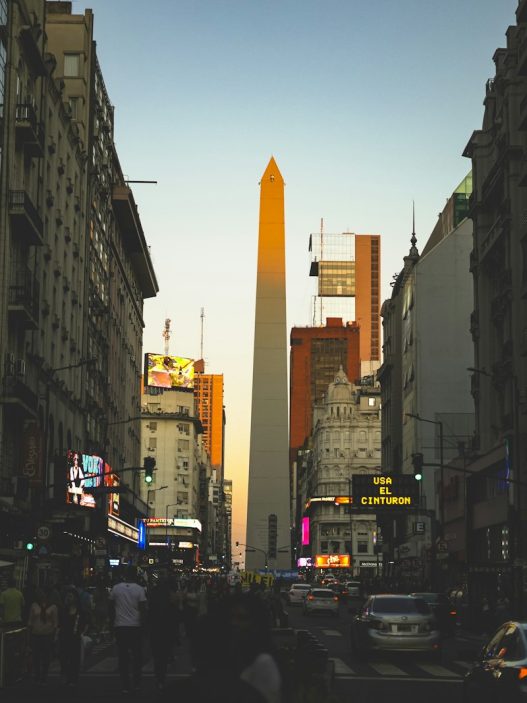
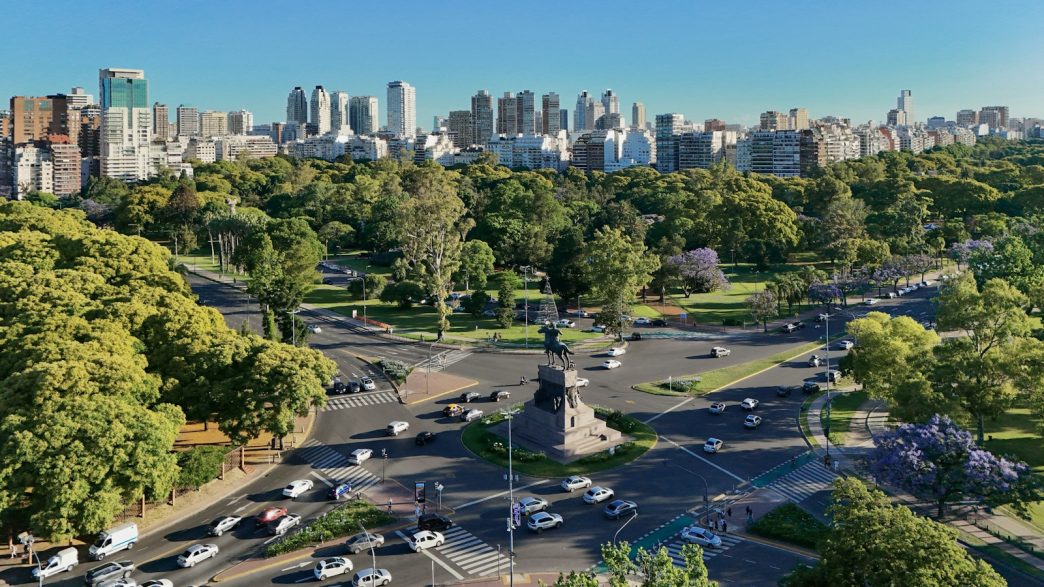
Cover photo: Juan Pablo Mascanfroni / Unsplash