

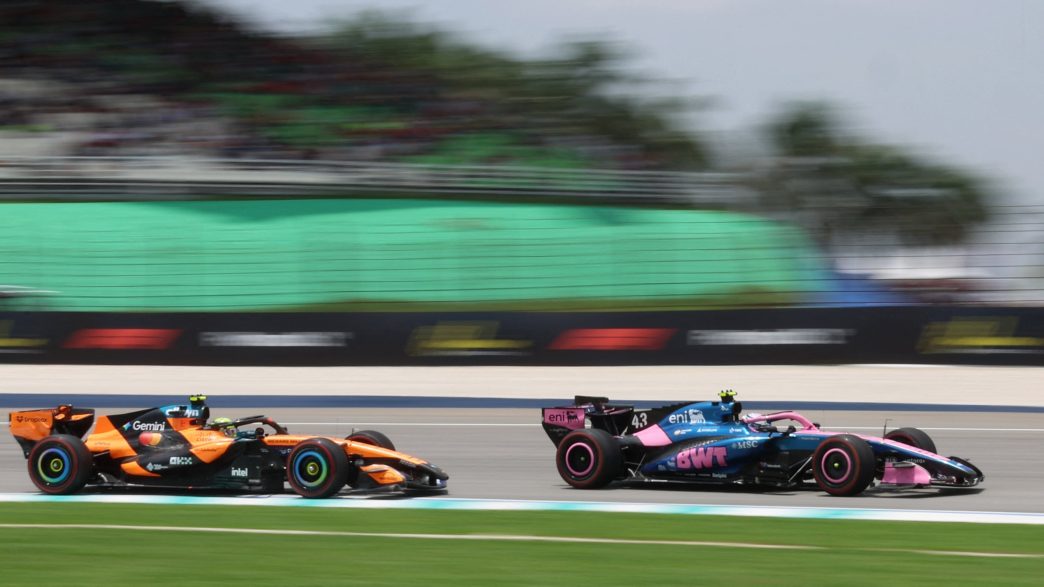
Argentine driver Franco Colapinto will have his last free practice this Saturday, October 3rd, before qualifying for the Malaysian Grand Prix of Formula 1, taking place at the Sepang International Circuit. Activities start at 1:30 a.m. Argentina time, with qualifying at 5:00 a.m., and the race scheduled for Sunday, October 4th at 4:00 a.m., all in Argentine time.
Due to the war conflict in the Middle East, the Fédération Internationale de l’Automobile (FIA) and Formula One Management (FOM) decided to move the traditional Bahrain Grand Prix to the Sepang circuit in Malaysia. This change presents a challenge for all drivers, including Colapinto, who will face an unfamiliar track and adverse weather conditions, with a 90% chance of rain forecasted for the weekend.
Colapinto will also have to deal with a penalty that will make him start from the back of the grid. This 15-place sanction was imposed after an accident with his teammate Pierre Gasly in Azerbaijan. As a result, his strategy and performance in free practice and qualifying will be crucial to improve his position on Sunday.
Context and Background of the Malaysian Grand Prix
Formula 1 returned to Malaysia after nine years, confirming the event on July 26th of this year. For 12 of the current championship drivers, including Franco Colapinto, Sepang will be a new circuit, adding complexity in terms of adaptation and strategy.
The Grand Prix was relocated from the Bahrain International Circuit in Sakhir to Malaysia due to security reasons linked to the conflict in the Middle East. Sepang, located in a tropical climate with a high chance of rain, is a challenge on its own; the race has historically been affected by flooding and variable track conditions, forcing teams and drivers to carefully plan their performance and vehicle management.
Colapinto races for the Alpine team and currently has 27 points in the drivers’ championship, placing 14th. His team, Alpine, has 68 points in the constructors’ championship, with Mercedes leading the overall standings with 538 points, followed by Ferrari and McLaren.
Practical Impact for Colapinto and Fans in Argentina and Latin America
For Argentine and Latin American fans, Colapinto’s presence in Malaysia means following the action during unusual hours, but accessible thanks to Fox Sports in Argentina and platforms like Disney+ in South America. Fans will need to stay alert for the morning free practice sessions, qualifying, and the race given the time difference with Malaysia.
Colapinto will face a challenging race due to his penalty, but the potential for surprises increases on circuits with difficult weather conditions. Supporters can take this opportunity to learn more about the Sepang circuit dynamics and team strategies that often vary on wet tracks.
Additionally, other notable drivers to watch include Andrea Kimi Antonelli and George Russell (Mercedes), Lewis Hamilton (Ferrari), and Lando Norris (McLaren), who remain in contention for the drivers’ championship. The competition promises excitement overall and a potentially interesting comeback for drivers like Colapinto.
- Date and times for Argentina: free practice 3 at 1:30 a.m., qualifying at 5:00 a.m., and race on Sunday at 4:00 a.m.
- TV Channels: Fox Sports (Argentina), Disney+ (South America), DAZN (Spain), and F1TV.
- Colapinto’s score in the drivers’ championship: 27 points, 14th place.
- Penalty for Colapinto: 15 positions.
- Weather forecast: 90% chance of rain throughout the weekend at Sepang.
Frequently Asked Questions
Why is the Bahrain Grand Prix being held in Malaysia?
The race was moved to Malaysia due to the war conflict in the Middle East, which made it impossible to hold the event at the Sakhir circuit in Bahrain.
What penalty does Franco Colapinto have for this Grand Prix?
Colapinto will have to start at the back of the grid due to a 15-place sanction for a previous accident with his teammate in Azerbaijan.
How does the Malaysian weather affect the competition?
The Sepang circuit has a high probability of rain, with a 90% forecast, which makes the race more unpredictable and demands greater adaptation from teams and drivers.
Source: www.infobae.com