


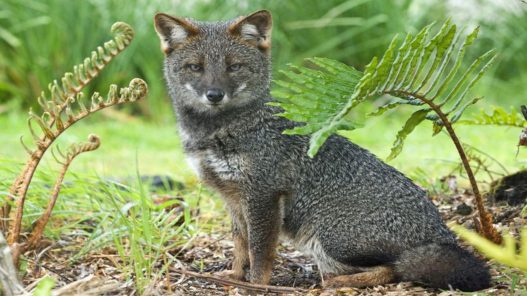
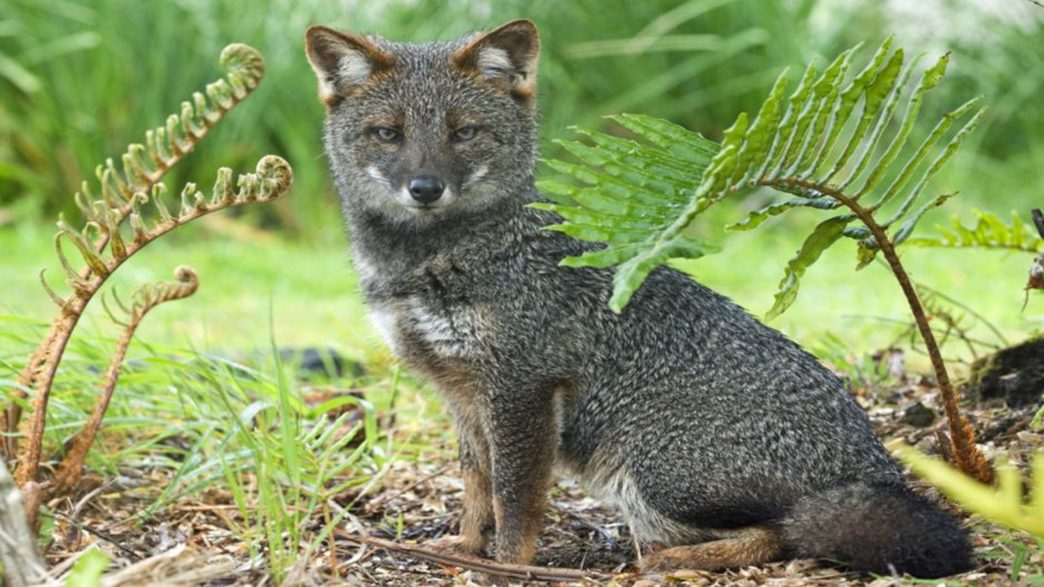
After more than 17 years of research, Javier Cabello, veterinarian and founder of the Chiloé Silvestre Biodiversity Conservation Center, has published an article in the journal Biological Conservation. His study calls for the Darwin fox (Lycalopex fulvipes) to be reinstated to the category of ‘critically endangered’.
Cabello’s study analyzed the population of the Darwin fox in the Chiloé archipelago, the Nahuelbuta Range, and Oncol Park in Valdivia. This is the only genetic study of this species, endemic to Chile, which seeks to understand how genetic diversity can influence its conservation. Cabello stated: “The chilote fox is one of the carnivores worldwide that has the lowest genetic diversity, even less than the most threatened feline in the world, which is the Iberian lynx, or the most threatened canid in the world, which is the Ethiopian wolf.” Due to its low genetic diversity, the species faces a higher risk of extinction.
To illustrate the issues of inbreeding, Cabello compared the chilote fox to a group of students in a classroom, where everyone would have different surnames. In the case of the chilote fox in Chiloé, all individuals share the same ‘surname’, resulting in an inbred population that affects their reproductive rate and the development of their offspring.
Until 2016, the Darwin fox was classified as critically endangered, but after new colonies were detected, it was reclassified as ‘endangered’. However, the study proposes that, given the fragmentation of the colonies and mathematical estimates that place the population below 2,500 individuals, the species should be reclassified as critically endangered.
Source: www.infobae.com