



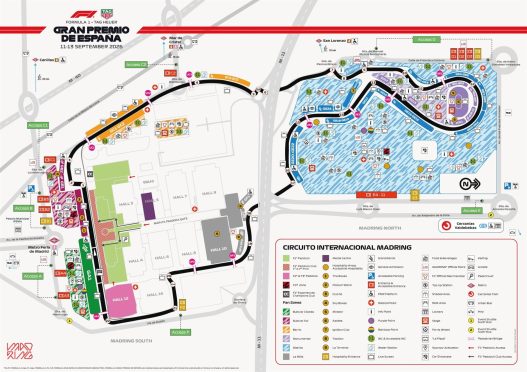
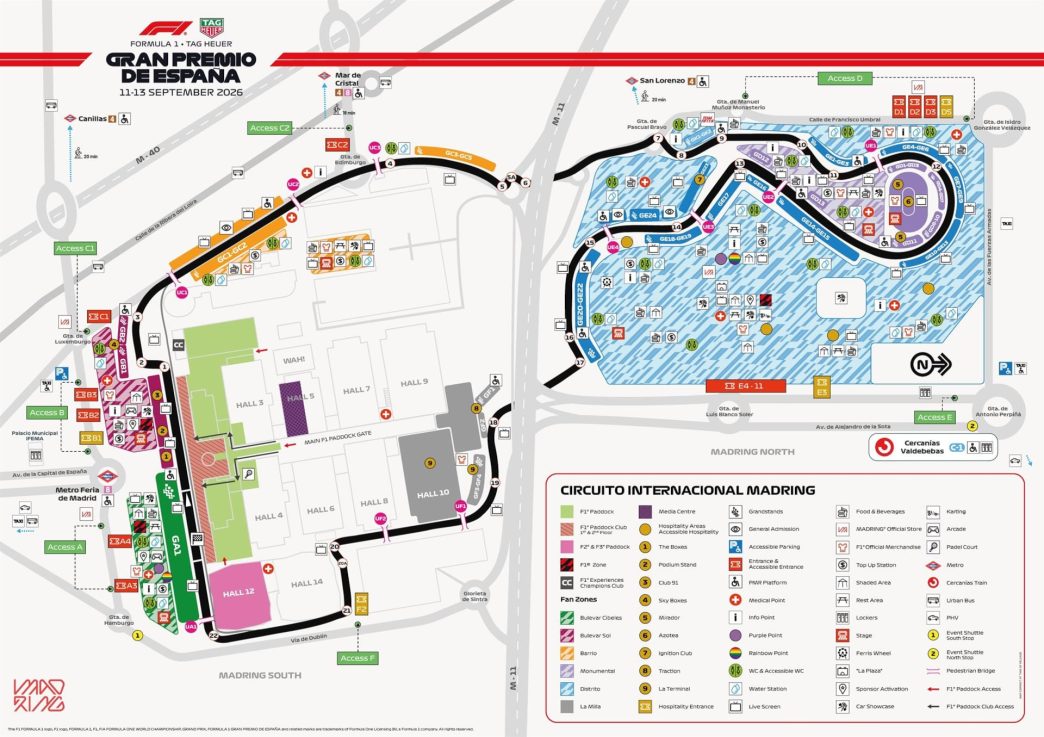
Access to the semi-urban Madring circuit during the Formula 1 Grand Prix, which will take place in the capital from September 11 to 13, will be divided into two independent zones without pedestrian connections between them. Each zone will have its own access and routes, and an official app has been created to provide maps and mobility updates.
Madring has presented the mobility plan for the event, aimed at prioritizing public transport and facilitating access for fans. In this way, the circuit will be divided into two sectors: Madring South, linked to Ifema Madrid and the Ribera del Sena Street, which comprises sections 1 to 5; and Madring North, in Valdebebas, covering sections 6 to 17. Entry will be key to planning the journey, as each ticket holder will receive specific transport recommendations based on their ticket.
Attendees can consult the new app for information on mobility, useful content, and updates. The plan includes 15 pre-filter zones, 18 access points, and over 150 entry lanes, with signage guiding participants to their corresponding access.
The organization has reminded that the Metro, Cercanías, EMT buses, and special shuttle services will be the main transport options. The key reference points are the Madrid Fair, Mar de Cristal, Valdebebas, Canillas, and San Lorenzo stations. The Metro Line 8 is expected to have trains of up to six cars with three-minute frequencies during peak times, while Line 4 will also expand access alternatives. For Madring North, the Valdebebas Cercanías station will be the main reference, with Renfe services reinforced over the weekend.
There will be traffic restrictions and access controls in areas surrounding the circuit. Regulation points will allow filtering or diverting traffic without closing all lanes. In the immediate vicinity, roads will have restricted traffic, including specific controls that will limit access to unauthorized vehicles. Additionally, parking zones will be enabled at the Metropolitano Stadium and the Alfredo Di Stefano Stadium, with recommendations for the use of taxis and VTC services.
Source: www.infobae.com