


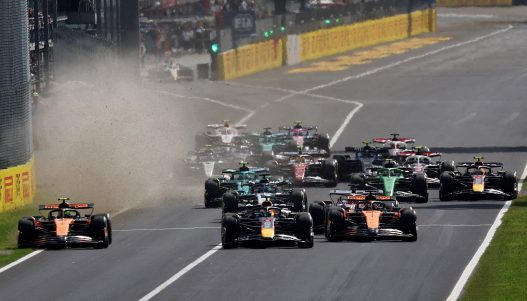
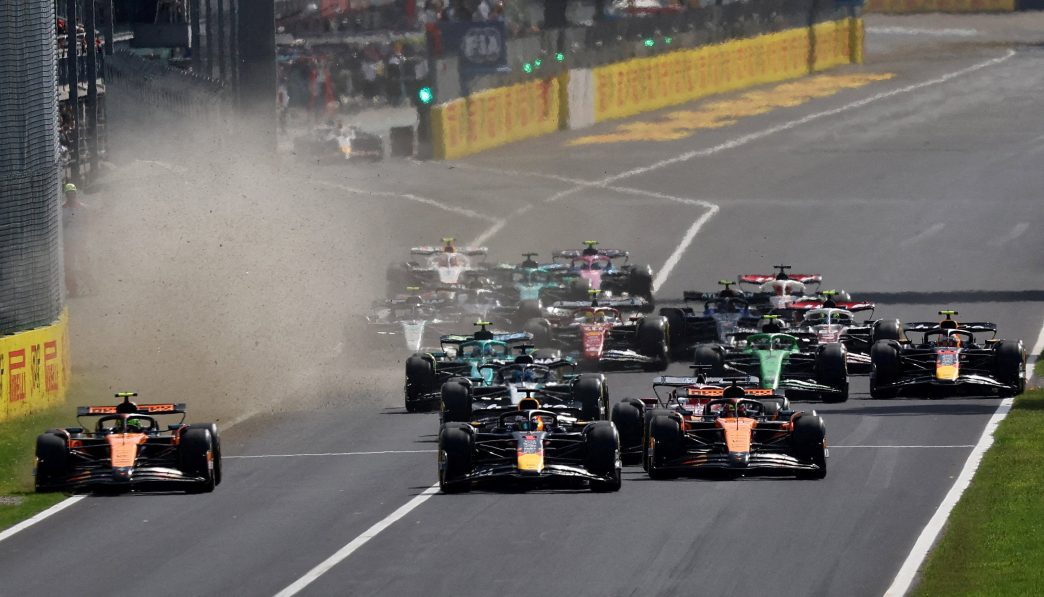
The Italian Grand Prix of Formula 1 will take place this weekend at the Autodromo Nazionale Monza, where a marked controversy arises. Preliminary simulations indicate that the cars will reach lower maximum speeds than in the Hungarian Grand Prix.
If this trend is confirmed on the track, it would represent a significant change for Monza, known as the Temple of Speed for its distinctive design that includes long straights and fast corners. Historically, the track has been the site of thrilling competitions where slipstreaming has been crucial for overtaking. This time, however, it is anticipated that the overtaking possibilities will be more “artificial,” due to the limited energy available for the drivers.
In the current format, drivers use almost 80% of the throttle on each lap, quickly depleting their electrical reserves. The Fédération Internationale de l’Automobile (FIA) has reduced the recoverable energy per lap to five megajoules, the minimum of the season, to prevent excessive use of ‘super clipping.’ This method means that the combustion engine reduces its power to allow for battery recharging.
Oscar Piastri, McLaren driver, raised concerns ahead of the event, revealing that his team had recorded higher speeds on the straight in Hungary compared to Monza. “In our simulations, I think we were faster on the main straight of Hungary than here, which doesn’t make much sense, but it’s more about the fact that we simply don’t have energy to burn,” Piastri commented, referring to the energy challenges they face on the Italian track.
Piastri’s comparison centers on the length of the straights, where the longest straight of Hungaroring proved to be more effective for accumulating energy compared to that of Monza. He added that if more energy were provided to burn, there would be no way to recover it on the track, thus creating a complicated cycle. “I think the race is going to be chaos, especially at the beginning,” the driver anticipated.
Energy management has been a debated topic this season, as while full-throttle usage is common, its frequency has increased. The FIA has taken measures to control energy recovery after significant incidents, such as Ollie Bearman’s crash in Japan, leading to discussions about the future and format of the sport.
Monza, a historic racing venue, has witnessed some of the most exciting races in F1, including one 55 years ago with 26 lead changes. However, this weekend poses a significant challenge to maintain the essence of motorsport.
Source: www.infobae.com