
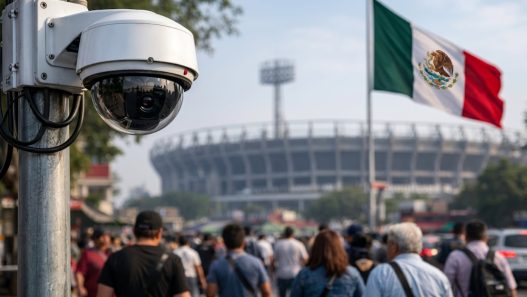
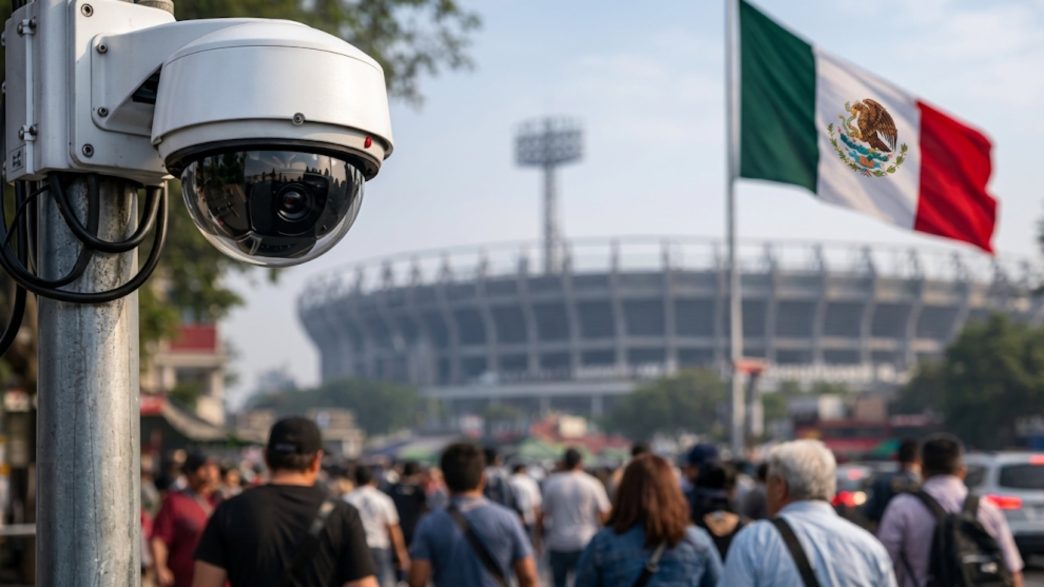
The FIFA World Cup has concluded, but the surveillance and control infrastructure implemented during the tournament might persist in Mexico, according to civil organizations. This warning was issued during the presentation of the report “Scream Goal and Scream Justice! Human Rights Violations in Mexico in the Context of the FIFA World Cup 2026”.
The document reveals patterns of repression and criminalization of protests, as well as restrictions on public space and an increase in security capabilities in Mexico City, Guadalajara, and Monterrey, the three host cities organized in conjunction with the United States and Canada. Josefa Gómez, from the Human Rights Program at Universidad Iberoamericana, emphasized that these records are crucial, as there is concern that guarantees of rights may be permanently loosened: “We are worried that once those guarantees have been loosened, there will be no going back,” she commented.
One of the most notable findings took place in Jalisco, where the budget for surveillance during the tournament even exceeded that allocated for the search for missing persons. According to Gina Díaz Martínez from the Center for Justice for Peace and Development (CEPAD), the budget addendum for search increased by 172.68%, although she called it a “budgetary illusion” since more than 90% of that growth was concentrated in the C5 and the Secretariat of Intelligence and Search for Persons. However, the funds did not contribute to field searches, forensic identification, or care for affected families. The C5 budget rose from 6.8 million pesos in 2025 to 1,345 million pesos in 2026, prioritizing video surveillance and monitoring technologies: “While we have clandestine graves multiplying (…) the State prefers to spend on smart cameras to monitor the streets,” Díaz questioned, reminding that Jalisco ranks first nationally in missing persons since 2019.
During June, organizations recorded 50 protest incidents, 18 of which occurred in Mexico City. The presence of state agents was confirmed in 40 of the verified cases, as well as differentiated patterns of containment, which included encirclements of families seeking answers amid the crisis of over 134,000 missing persons and an increase in violence against teachers from the CNTE (National Coordinator of Education Workers). Gómez also indicated that a strategy of discursive stigmatization was carried out that, without openly criminalizing protests, would have served to minimize the seriousness of the use of force.
Additionally, the report documented the harassment of homeless individuals in both major cities, as well as urban reordering actions that affected indigenous communities, popular neighborhoods, and searching families in Monterrey. Adverse impacts on journalists were reported during at least six protests, including 11 assaults against female journalists. Adriana Quiroz from Red TDT questioned the lack of a clear timeline for the conclusion of these security measures, suggesting that police actions dressed in civilian clothing might be functioning as a laboratory to test social control capabilities.
This report emerges in a context of international alert where human rights groups and families of victims, led by Amnesty International, have requested the UN General Assembly to create an “extraordinary mechanism” to address the crisis of disappearances in Mexico, which has already reached over 135,000 unlocated individuals and 72,000 unidentified remains. These circumstances reveal the growing tension between the expansion of monitoring infrastructure in public space and the insufficient forensic and search response to the crisis.
Source: www.infobae.com