



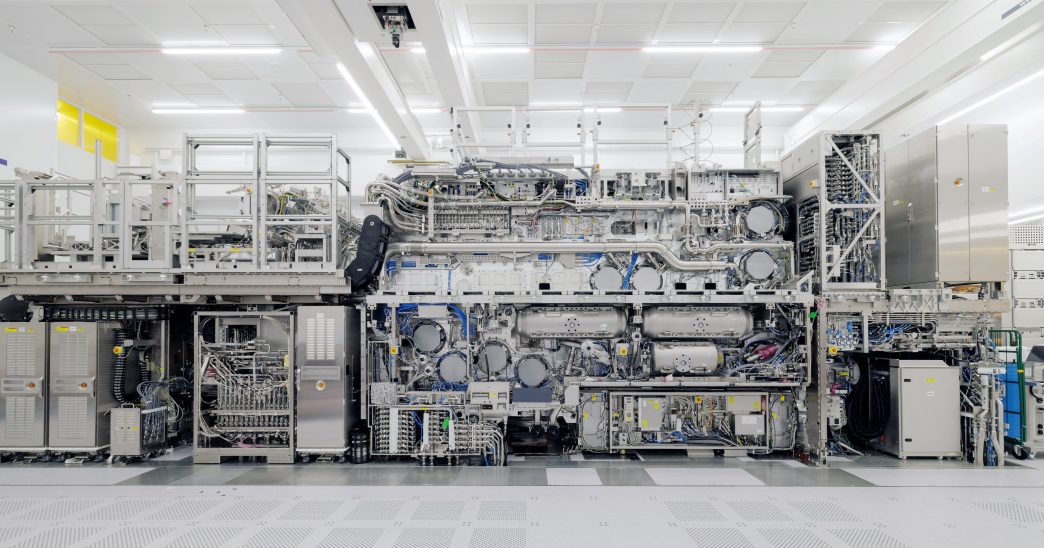
China will need about 15 years to develop its extreme ultraviolet lithography (EUV) machines, the most advanced technology for manufacturing next-generation chips, according to Frank Rohmund, CEO of the semiconductor division of the German group Zeiss.
Rohmund, who spoke with Bloomberg TV at the Semicon Taiwan fair, described his estimate as “a reasonable assumption” but admitted that the exact pace of technological advances in China is difficult to assess. Chip manufacturing has become a key target in the United States’ efforts to restrict China’s access to advanced semiconductors, especially in the context of growing competition for artificial intelligence development.
Washington already prohibits ASML, the lithography technology supplier, from exporting its most advanced machines to China, while Beijing is making significant investments in its semiconductor sector. Rohmund also expressed concerns about the possibility that the United States may expand its export controls to older-generation DUV machines, arguing that these restrictions could harm the U.S. industry without slowing down Chinese progress. “We do not believe in the positive impact of these export restrictions, as they accelerate innovation in China,” he stated.
Rohmund’s estimate comes shortly after a report from UBS analysts, which claims that China is at least a decade behind in developing its own EUV technology and that its level of technical maturity is comparable to ASML’s in 2004. According to the report, the Chinese industry aims to increase its self-sufficiency in semiconductors to 80% by 2030, up from the current 30%.
Although EUV technology remains out of reach, Chinese manufacturers have already made progress in DUV lithography systems. A company in Shanghai is producing immersion DUV equipment, and UBS predicts that China may begin mass production in two to five years. China has also managed to produce a 7-nanometer class smartphone processor without using EUV technology, highlighting the Kirin 9000S chip from the Huawei Mate 60 Pro, crafted by SMIC through a process known as “N+2”.
Source: www.infobae.com