


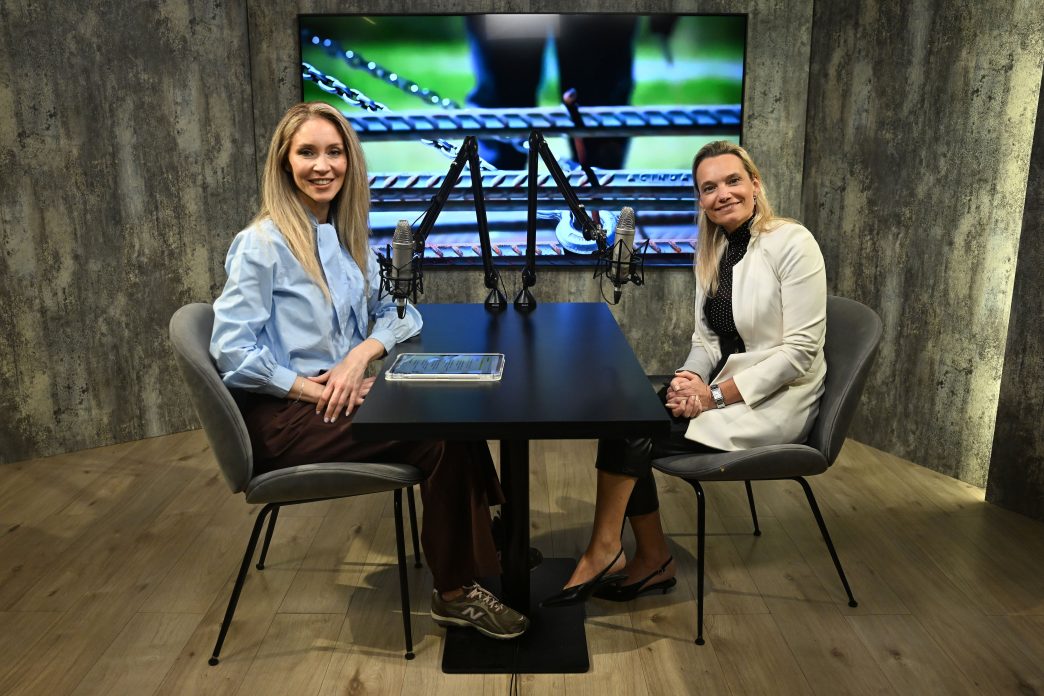
In the steel industry, the inclusion of women in leadership positions is on the rise, yet it remains a work in progress. María Eugenia Arata, Director of People and Institutional Relations at ArcelorMittal Acindar, outlines the necessary approach to making advancements in this field during her participation in Infobae Talks Women with Impact.
Arata shared her personal experience, which illustrates the potential for overcoming obstacles in a historically male-dominated environment. At 19, she moved to Buenos Aires from Mar del Plata, facing financial difficulties to continue her education. Despite these challenges, she applied for and received a scholarship, built a network of contacts, and learned to view obstacles as part of her professional journey. “Whatever we set out to achieve can be accomplished. We must not lose sight of our goal,” stated the executive, who also emphasized the importance of being prepared to seize opportunities as they arise.
Female leadership is also being managed through the introduction of quotas in a conventionally male industry. Arata pointed out that without the implementation of quotas, it would be challenging to achieve balance. ArcelorMittal Acindar aims to reach 30% women in leadership roles by 2030, a significant advancement from the current 22% and a remarkable increase from a decade ago, when the figure was nearly nonexistent. A noteworthy fact is that currently 50% of the company’s directors are women.
The transformation extends beyond the offices. Through its foundation, the company works within its community to promote educational changes in technical schools, engaging with students about inclusion and opportunities in STEM fields. Arata expressed surprise at the persistence of certain biases among some teachers and infrastructures that have yet to evolve, such as the lack of women’s restrooms in technical schools.
Arata also emphasized the need for organizations to adapt to the skills of their members, moving away from formal titles and positions. “We talk about skills, not roles,” she explained. Artificial intelligence is redefining human contribution in the workplace, and according to Arata, decisions will still be made by people.
Finally, her intergenerational approach reflects an understanding that increased life expectancy has transformed the job landscape. The company implements programs aimed at young people and more experienced professionals, strengthening the cohesion of its organizational ecosystem. The central question in their strategy is what legacy they leave and what impact they generate in the communities where they operate, an aspect that is reflected in their initiatives and was evident in Infobae Talks Women with Impact.
Source: www.infobae.com