


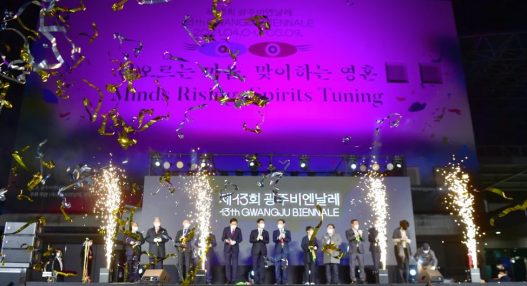
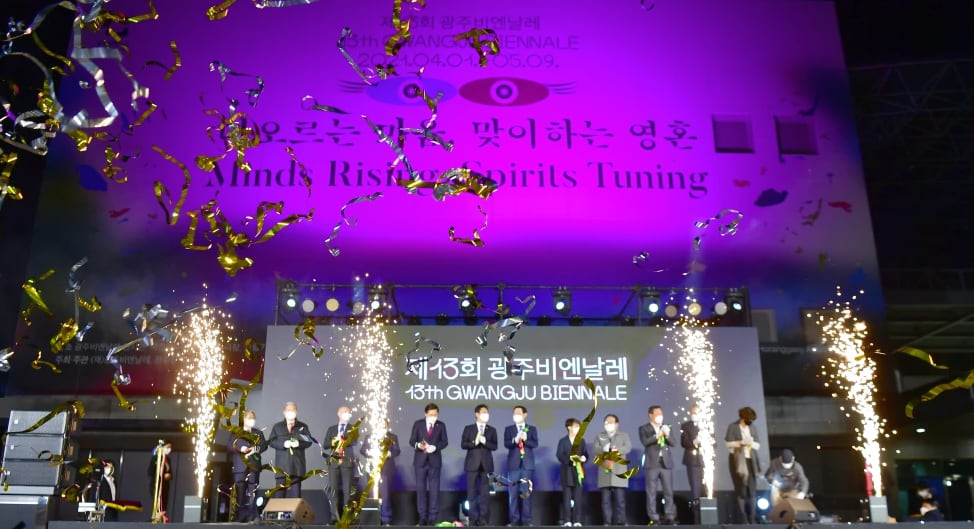
A group of Chinese artists is boycotting a significant art exhibition in South Korea over the organizers’ plans to use the name “Taiwan Pavilion” for a showcase of Taiwanese artists.
China views self-governing Taiwan as part of its territory and rejects the island’s sovereignty claims. Beijing typically refers to Taiwan as the “Chinese region of Taiwan.” On Thursday, China’s Foreign Ministry criticized the South Korean organizers of the Gwangju Biennale, one of Asia’s prominent art exhibitions, stating that the organizers had “stubbornly clung to the wrong practice, allowing the Chinese region of Taiwan to participate under a name completely incompatible with its status.” Spokesperson Guo Jiakun expressed hopes that the South Korean government would uphold its political commitment to the principle of “one China” through tangible actions.
On the same day, Chinese artists announced their withdrawal from the festival, which is set to open on Saturday and run until mid-November. The “Taiwan Pavilion” is among approximately 25 small national and institutional galleries operating independently from the main biennale venue as part of its Pavilion Project. Curator Ruan Yuelai stated, “The Gwangju Biennale organizers used an incorrect name for the Chinese region of Taiwan regarding its participation in the exhibition, which shifted a political issue into the art realm. The Chinese exhibition team cannot accept this and unanimously agreed to withdraw from the exhibition to express our firm protest.” As of Friday afternoon, Chinese participants had not yet removed their paintings, sculptures, and other artworks initially intended for the “China Pavilion.”
The festival organizers have apologized for the “confusion” surrounding the Pavilion Project. Taiwan’s Ministry of Culture announced in August that Taiwan intended to exhibit under the name “Taiwan Pavilion” but protested when the organizers changed it to “Pavilion of the National Taiwan Museum of Fine Arts.” The art festival stated on Wednesday that it “deeply apologizes for causing concern and confusion” to those involved, noting disagreements with the Taiwanese museum regarding the name.
The organizers indicated they had signed a contract with the National Taiwan Museum of Fine Arts for its participation and believed the Taiwanese artists would exhibit under the museum’s acronym, “NTMoFA.” They asserted that the Taiwanese museum subsequently insisted on the name “Taiwan Pavilion” and that pressure was felt to accept this designation.
Earlier this week, China also warned of consequences for Taiwan following the attendance of the island’s foreign minister at a diplomatic forum in Palau, an island nation. In May, China pressured an African country to exclude Taiwanese activists from an international human rights conference. It remains unclear whether China’s protest will escalate into a significant diplomatic dispute with South Korea, which is currently governed by a liberal administration seeking to strengthen ties with China, its largest trading partner. The South Korean Foreign Ministry stated that the decision on the name was made by a non-governmental entity and had no connection with the government. It added that South Korea hopes the recent issue will not affect relations and cooperation between the two nations.
While Taiwan is self-governing, China claims it as part of its territory. The two sides separated following a civil war in 1949. Beijing has increased pressure on Taiwan, causing it to lose diplomatic allies, and the island now has only 12 diplomatic allies worldwide.
Source: www.infobae.com