



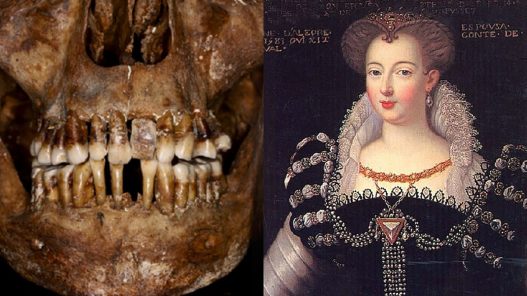
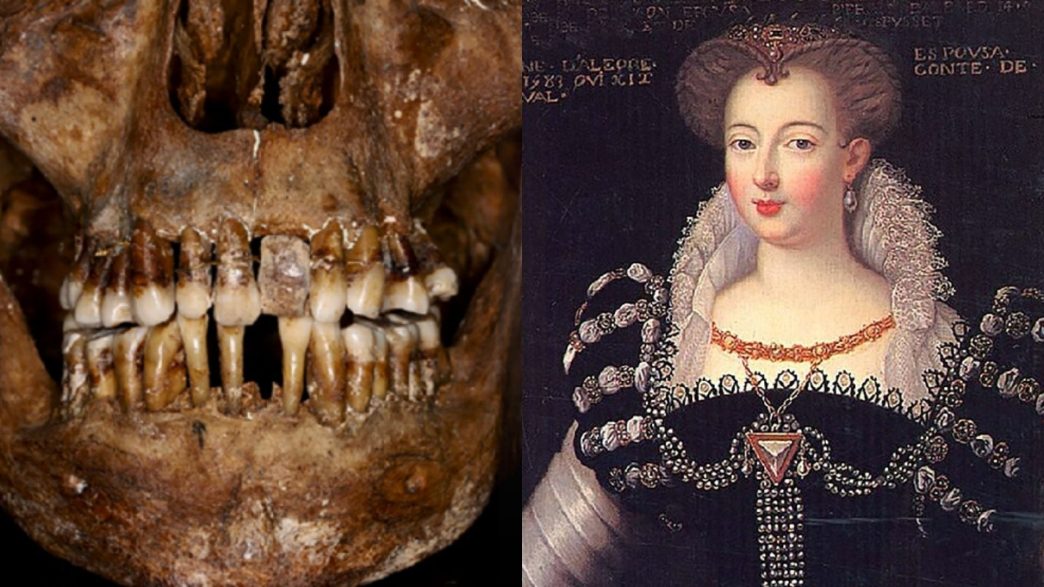
A team of archaeologists discovered the body of Countess Anne d’Alègre at Laval Castle, France, who passed away in 1619, in a surprisingly well-preserved state. Her dental condition, preserved over the years, has revealed secrets about the oral health practices of the nobility in the 17th century.
Laval Castle, a medieval fortress from the 11th century located in northwestern France, has witnessed the lives of numerous aristocratic generations. In 1988, during an excavation, the coffin of the countess was uncovered, and her teeth were found in an unusual state. A metallic wire was found around them, but the research methods of that time could not fully understand it. Thirty-five years later, the coffin was re-opened with advanced technology, revealing the identity of the countess and the secret of her teeth.
Current analyses, published in 2023, determined that Anne d’Alègre used a gold wire to keep her teeth in place and had a dental prosthesis made of elephant ivory, which was unusual in Europe at that time. These findings were studied through CT scanning and 3D scanning, allowing researchers to digitally reconstruct her oral health and assess the condition of her dentition.
Experts diagnosed that the countess suffered from advanced periodontitis, a condition rare in paleopathology, as it was the first time a modern classification was applied to analyze archaeological remains. The results showed that the prostheses exhibited wear and had been used during her lifetime, and the use of gold in her teeth indicated ongoing treatments that reflected a high social status.
In the 17th century, dental health was intrinsically linked to social perception, especially among women, who were judged by their appearance. Historically, it was believed that women without teeth could lose their respectable position, highlighting the social pressure on female aesthetics during that period.
Source: www.infobae.com